Heat Rating of a Spark Plug
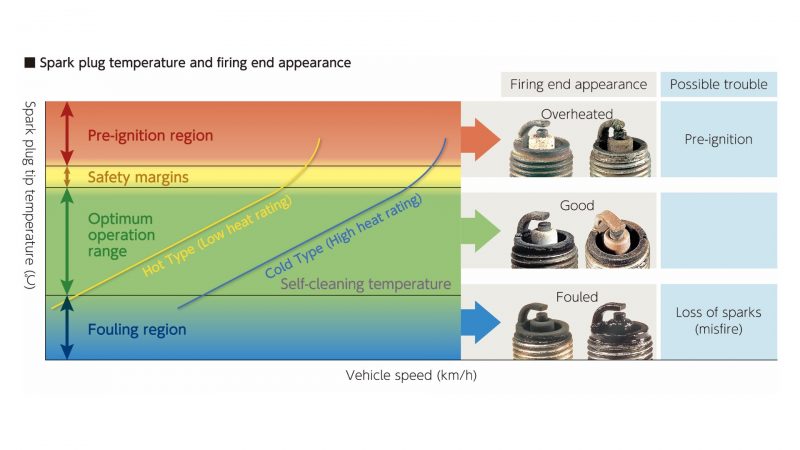
A spark plug must dissipate the heat produced by the combustion gases. The heat rating is a measure of the amount of heat dissipation. The heat rating is expressed as a number.
Hot Type = A lower number: Long Insulator Nose
There is a greater surface area exposed to the hot combustion gases. Heat transfer to the engine head is slower. RESULT = Its firing end heats up quickly.

Cold Type = A higher number: Short Insulator Nose
Less surface area exposed to the hot combustion gases. Heat transfer to the engine head is quicker. RESULT = Its firing end does not heat up quickly.
It is essential to use a spark plug with a heat rating that matches a specific engine and its condition of use.
When a wrong heat rating is selected….
When the heat rating is too high => The spark plug temperature remains too low and causes deposits to build up on the firing end; the deposits provide an electrical leakage path that gives rise to a reduction of spark.
When the heat rating is too low => The spark plug temperature rises too high and induces abnormal combustion (pre-ignition); this leads to melting of the spark plug electrode that could cause problems such as piston seizure.

Why is the firing end appearance of a spark plug important?
The reason is that the firing end appearance reflects the suitability of the spark plug as well as the condition of the engine.
The border-line between the fouling and optimum operating regions (500℃) is called the spark plug self-cleaning temperature that accumulated carbon deposits are burnt off.